









Getting to Know Tuberose
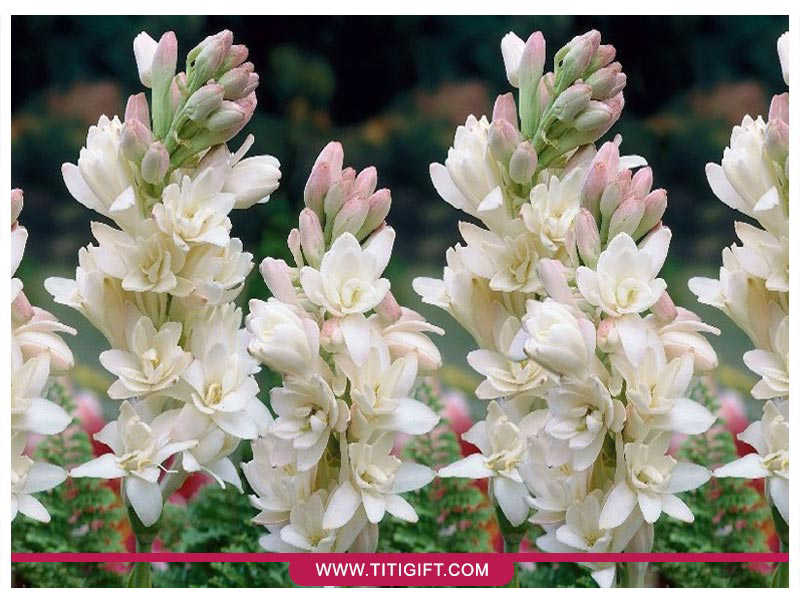
Scientific Name: Polianthes tuberosa L
Family: Amaryllidaceae (Agavaceae)
Tuberose is a perennial plant with fragrant white flowers, whose extract is used in perfumery. In English, it is called tuberose, a name derived from the Latin word *tuberosa*, meaning swelling or tuber. This flower is native to Mexico and is exceptionally fragrant and aromatic. Depending on the season in which the bulbs are planted, the plant blooms in spring, autumn, or summer. Tuberose, which is commercially cultivated in Iran, is unique worldwide because of its intense fragrance. This distinctive quality has earned it a special position in the global flower market, and large quantities of these flowers are exported every year to countries around the world, particularly in Europe, where the climatic conditions required for propagating and growing tuberose are not available. Tuberose flowers may be single, semi-double, or double. The flowers are naturally white, but other colors have been introduced through breeding, resulting in a loss of their original purity. The plant has numerous narrow, elongated, lance-shaped leaves arranged in a basal rosette at ground level, with the flowering stem emerging from the center. Some varieties are variegated, featuring leaves with yellow or golden stripes, making them particularly attractive and suitable for garden decoration. Its flower spike measures 14–38 cm in length and grows at the tip of the flowering stem. Approximately 30 pairs of white florets develop alternately along the upper part of the spike. The petals are fleshy and star-shaped. This plant is cultivated both in pots and outdoors.
This beautiful, fragrant flower symbolizes modesty, purity, and sincerity in love. Giving it to your beloved signifies that you have faith in their purity and virtue. Tuberose is also regarded as a symbol of creativity and new beginnings. Its white color represents purity, authenticity, and peace. Many people believe that tuberose helps ward off negative energy and promotes a positive mood. Therefore, if you are looking for a flower whose fragrance you can enjoy while also believing it helps keep negative energy away, tuberose is an excellent choice. It can also be given as a gift to express affection and gratitude. Today, tuberose is widely used in bridal bouquets because of its long-lasting freshness and delightful fragrance.
Tuberose Care and Growing Conditions:
In general, tuberose is sensitive to cold and should therefore be planted after the cold weather has passed. The bulbs should not be planted too deeply, as sprouting may take several months. Planting depth, measured as the distance from the soil surface to the top of the bulb, should be between 3 and 10 centimeters. Shallow planting makes it easier for the plant to emerge, encourages greater leaf production, and also affects stem length. Conversely, increasing the planting depth delays sprouting and affects the number of leaves produced by the plant, ultimately resulting in reduced yield.
Light:
For proper flowering, tuberose needs 5 to 6 hours of direct sunlight each day. Insufficient light and keeping the plant in the shade may prevent flowering, cause buds to drop, lead to pale leaves, and result in thin, elongated growth.
Watering:
The soil around tuberose should always retain some moisture. However, avoid overwatering, as this can cause root rot. On the other hand, insufficient watering causes the foliage to turn a dark bluish-green color and reduces flower quality. When planting the bulbs, water the soil initially, but stop watering after planting until the bulbs begin to sprout.
Temperature:
The ideal temperature for tuberose is between 15 and 29°C. Do not expose the plant to temperatures below 10°C, as this can damage it. Tuberose bulbs are also sensitive to cold. During winter, the bulbs should be removed from the soil and stored in a warehouse. Bulb production reaches its maximum at temperatures between 20 and 30°C.
Soil:
Tuberose requires light, sandy soil with excellent drainage. Soil that remains waterlogged can cause the roots to rot.
Fertilizing:
If you want your tuberose plant to produce abundant, healthy blooms, do not neglect fertilization, especially during the growing season. Fertilizing tuberose has a significant effect on improving both the quality and quantity of its flowers. To nourish the plant, use a balanced combination of phosphorus, potassium, and nitrogen fertilizers.