









Getting to Know Freesia Flowers
Scientific Name: Freesia refracta
Family: Iridaceae
Freesia is a herbaceous bulbous plant native to South Africa. It is highly valued in the floral industry for its use as a cut flower in flower arrangements and bouquets. Freesia is especially admired for its delightful fragrance and distinctive scent. It is also widely used in the perfume industry. Freesia generally blooms in winter and early spring.
Freesia flowers have such a strong, penetrating fragrance that even a few cut stems can fill an entire room with their beautiful scent. These plants can also be grown as houseplants, provided they are placed in a cool, sunny location.
Freesia has sword-shaped, light green leaves, and its flowering stems typically grow 20 to 30 centimeters long. The plant itself reaches a height of approximately 30–60 centimeters. Its flowers are also remarkable for their shape and arrangement. The beautiful, trumpet-shaped flowers grow in clusters along gracefully curved stems, creating an eye-catching display. Their distinctive arrangement and elegant appearance have made freesia a popular choice in floral design and a favorite for those looking to buy flowers.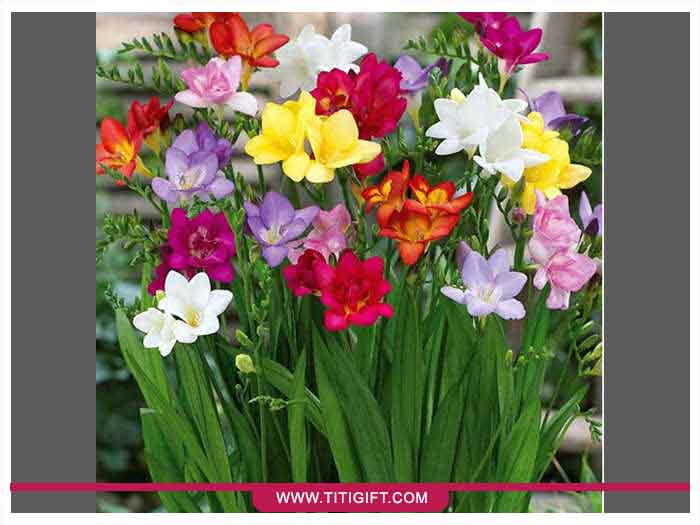
Growing Requirements:
Watering: Freesia is highly sensitive to drought. Water the plant when the soil surface begins to dry out. Keep in mind that overwatering can cause bulb rot and encourage fungal diseases. Insufficient or delayed watering can also cause the leaves to turn yellow and dry out, as well as delay flowering.
Light: Freesia generally requires direct sunlight. During budding and flowering, however, it should be kept in a partially shaded location to help prolong the flowering period. Its roots benefit from cool, shaded conditions. After flowering, move the plant to a location with direct sunlight.
Temperature: Temperature is one of the most important factors affecting the growth and development of freesia. This flower is sensitive to cold and cannot tolerate harsh winter conditions, which is why it is generally not grown outdoors in garden beds in regions with severe winters. It requires a relatively long growing season at low temperatures. In general, temperatures above 18°C can delay flowering while increasing plant height and leaf production. Lower temperatures can also delay flowering and result in shorter flower stems.
Humidity: Maintaining adequate moisture after planting freesia bulbs helps initiate sprouting and flowering. Consistent soil moisture promotes better growth and improves flower quality. However, avoid waterlogged soil.
Fertilizing: To reduce the risk of leaf burn, the soil should be free of fluoride. Freesia is sensitive to high soil salt concentrations. Excessive fertilizer can burn the roots and inhibit plant growth. Therefore, fertilization is not essential unless a soil analysis indicates a nutrient deficiency. If needed, fertilizing can begin when the plant reaches approximately 15 centimeters in height, with applications every two to three weeks.