







All About Chrysanthemum Flowers
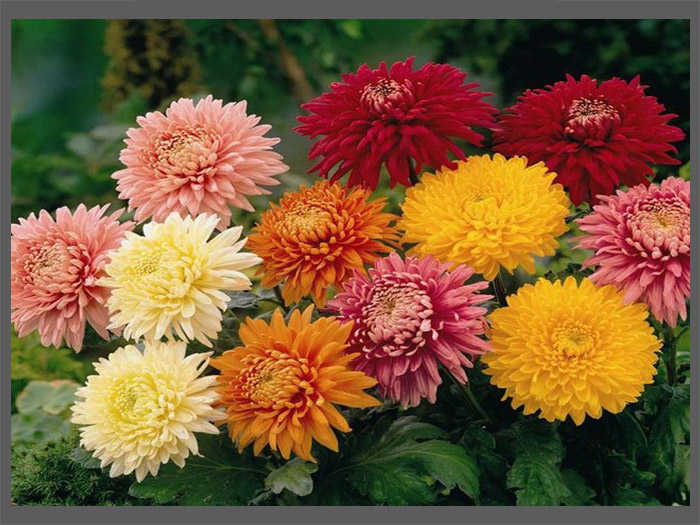
Chrysanthemum is considered the national flower of Japan, although its original native region is Asia, particularly China and Japan. This beautiful flower has more than 200 different species. Some varieties are annual plants, while others are perennial shrubs or small bushy plants. Today, chrysanthemums are widely cultivated for the florist industry, flower delivery, and as ornamental houseplants. This attractive flowering plant is capable of blooming throughout the year. Its leaves may be smooth or serrated and grow alternately along the stems. Chrysanthemums are available in a wide range of colors, with blue being the only color that does not naturally occur. Some chrysanthemum varieties closely resemble dahlias.
Popular Types of Chrysanthemums
Standard Form: These varieties produce a single large bloom on each stem, making them ideal as cut flowers and perfect for florist shops. Cut chrysanthemums are commonly used in flower bouquets, flower boxes, flower baskets, and funeral wreaths.
Spray Chrysanthemum: This type has a dense, compact growth habit and produces numerous small flowers clustered together.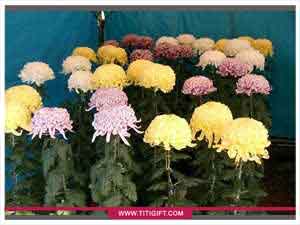
Based on the shape and structure of the flower head, commercially grown chrysanthemums are classified into the following categories:
1. Single
Similar to a sunflower, featuring approximately five rows of broad ray florets surrounding a yellow central disc with a green center.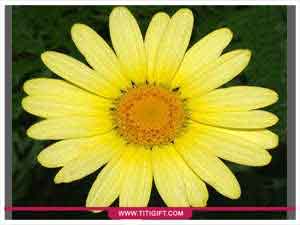
2. Anemone Centred
Resembles the single type, but the central florets are elongated and tubular, forming a raised cushion-like center. The tubular florets may be the same color as or different from the outer petals.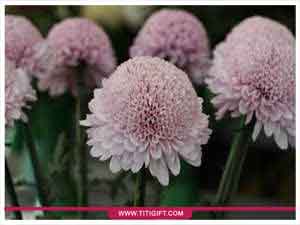
3. Pompon
These flowers are fully double with a perfectly round, ball-shaped appearance. Their short, evenly arranged ray florets completely conceal the center. Pompon chrysanthemums are available in three different sizes.
4. Decorative
Decorative chrysanthemums resemble the pompon type but have longer outer petals than the inner ones, giving the flower a flatter and less symmetrical appearance. Medium and large-sized decorative chrysanthemums are frequently used in various flower delivery arrangements.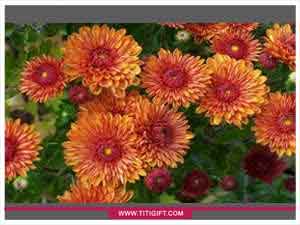
5. Large-Flowered Types
These varieties produce blooms larger than 10 cm in diameter and are divided into several forms. In most cases, the central florets are not clearly visible.
Incurved
Fully double, spherical flowers with petals that curve upward and inward toward the center.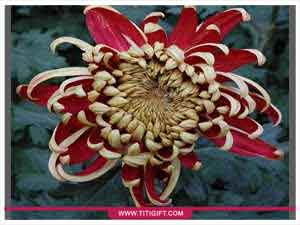
Fully Reflexed
Completely double and globe-shaped flowers in which the ray florets bend downward and inward until they nearly touch the stem.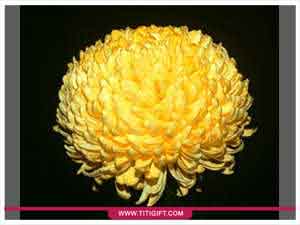
Reflexed
Similar to the Fully Reflexed type but with a less compact arrangement, creating an umbrella-like shape.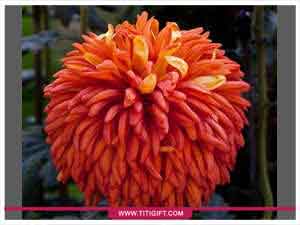
Intermediate
Fully double, spherical flowers where most ray florets curve upward while some of the lower florets bend backward.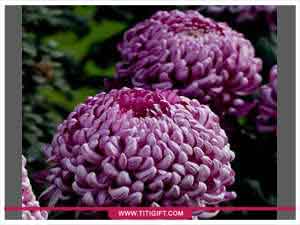
The tubular ray-flowered chrysanthemums are further divided into four forms:
Spider Form
Fully double flowers with long tubular petals, especially on the outer rows, creating a graceful, slightly drooping appearance. The inner petals point upward, while the tips are curved into hook-like shapes.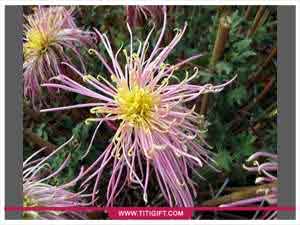
Fuji
Very similar to the Spider Form, although the petals are generally shorter, less drooping, and lack the hooked tips.
Quill-Shaped
Fully double flowers with narrow tubular petals. The outer petals hang slightly downward, while the inner petals curve upward.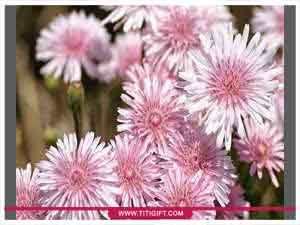
Spoon-Shaped
Similar to the quill-shaped type, except that the tips of the tubular petals broaden into a spoon-like shape.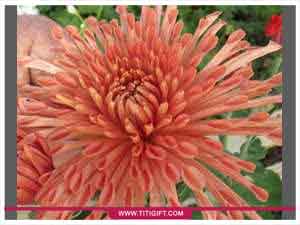
Growing Requirements
Temperature: During the vegetative growth stage, the ideal daytime temperature is 18–23°C and nighttime temperature is 16–18°C. During flowering, temperatures should be reduced to 13–16°C during the day and 10–13°C at night.
Light: Chrysanthemums thrive under bright light. During summer, greenhouse-grown plants benefit from slight shading, while shading is unnecessary during other seasons. Growth slows considerably during winter because of reduced light intensity. Although chrysanthemums require full sunlight, they prefer protection from intense midday sun. Insufficient light prevents many flower buds from opening.
Watering and Humidity: The soil should remain consistently moist but never waterlogged. Misting once a week helps maintain humidity; however, excessive humidity may cause the leaves to turn yellow.
Soil: The ideal growing medium is a mixture of loam and sand (light soil), with an optimal pH between 5.5 and 6.5. In alkaline soils, yellowing of leaves and shoot tips is common due to reduced iron absorption. The electrical conductivity (EC) of the soil solution should remain below 2.5 mS/cm. Soil sterilization is recommended to prevent vascular diseases such as Verticillium wilt. Chrysanthemums are also highly sensitive to excessive ammonia levels in the soil.
```