





History of Flower Arranging
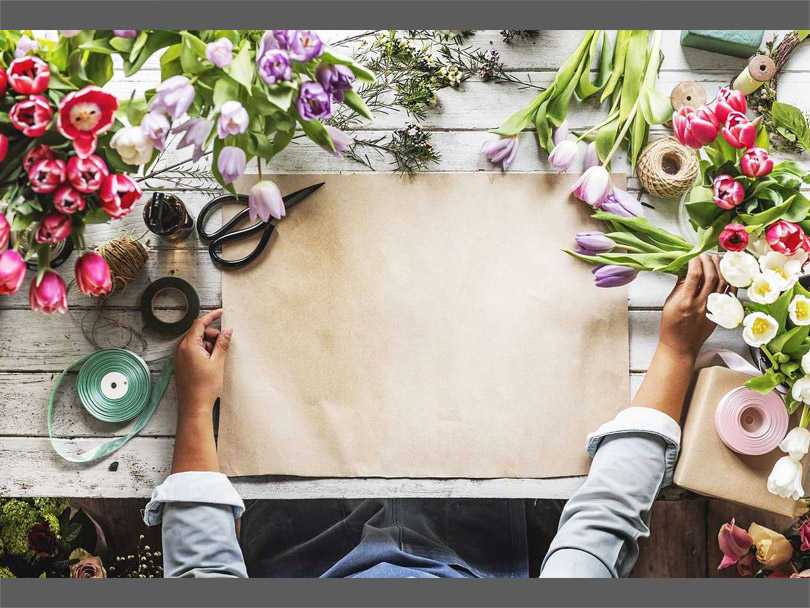
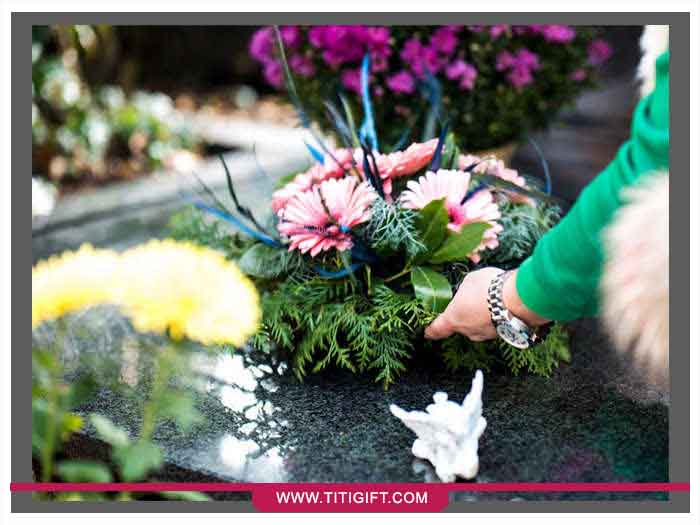
In general, it can be said that the history of flower arranging dates back centuries. Humans have been familiar with flowers and plants since ancient times and have used them for flower arranging and decoration, enjoyed their fragrances, and also made use of the nutritional and medicinal properties of plants. As we mentioned earlier, the use of flowers by humans dates back to ancient times; there is even evidence of humans using flowers during the Paleolithic era. Archaeologists have discovered skeletons in Iraq with flowers placed beside them, and by examining graves dating back to the fourth geological age, they have concluded that humans may have also placed flowers on graves at that time and used flowers to express their emotions.
Flowers are incredibly beautiful and extraordinary creations that can bring brightness and freshness to every day and every moment of your life. A beautiful arrangement of flowers and a proper, flawless floral design can fill your surroundings with a sense of freshness and delicacy, while captivating every heart and pleasing every eye with its beauty. Our floral design specialists at TiTiGift online flower shop artistically create delightful and extraordinary arrangements for you with beautiful and luxurious floral designs. Today, floral design is carried out in Eastern, Western, and other styles and on a wide range of scales. TiTiGift online flower shop makes it possible for you to purchase flower baskets, order bouquets, order flower boxes, order flower wreaths, and more, and will deliver your flowers at your desired time and location throughout Iran.
Flower Arranging Throughout World History:
The Achaemenid Period in Iran:
Iranians have also been familiar with flowers and flower arranging since ancient times. In inscriptions and illustrations that have remained from ancient Iran, especially from the Achaemenid period, there are images of people holding flowers and bouquets in their hands. The use of flowers can be clearly seen in the carvings of Persepolis. In particular, the lotus flower, which was a symbol of peace and friendship and was considered sacred by Zoroastrians, can be clearly seen in these carvings. Based on historical and cultural evidence, the people of Iran have always placed great value on flowers and plants, and this appreciation and affection can still be seen in various aspects of their lives today. Traces of plants can be found in inscriptions and illustrations, jewelry designs, coins, carpets, the poems of great Iranian poets, and more.
Flower Arranging in China and Japan:
The oldest discovered book on flower arranging belonged to Japan and was written in 1445 AD. In Japanese culture, flower arranging through the art of Ikebana has been passed down from generation to generation for many years. Simplicity and linear form are among the main characteristics of Ikebana, which had a significant influence on Western flower arranging techniques in the late nineteenth century. Flower arranging was learned as an art by Buddhist Monks in China and eventually reached Japan. In ancient China, arranging flowers was considered a highly delicate and valuable art. The Chinese believed that everything that was alive was sacred, and since flowers are living, they were also considered sacred and had to be arranged carefully and beautifully.
Flower Arranging in Ancient Greece:
From the beginning, the Greeks practiced flower arranging in a unique and distinctive way. Lovers would exchange small, fragrant bouquets with one another at that time. On festive days, people wore flower wreaths as part of their attire. Special wreaths and bouquets were beautifully arranged and presented as gifts to military heroes and other heroes.
In ancient Greece, the color of flowers was never considered as important as the type of flower, its fragrance, and its symbolism.
The Most Important Styles of Flower Arranging:
Japanese: The Japanese style consists of 3 main principles: 1- Miniaturization, 2- The use of borrowed scenery, 3- Symbolism (meaning that each flower represents something.)
European: In the European style, what matters most is the quantity and the components of the flowers (color, appearance, and...). The principles of this style include creativity, taste, and the use of geometric shapes.
Modern: This style has no general rules, regulations, or a specific philosophy and depends more on the designer's way of thinking.
Famous Floral Designers:
Daniel Ost, Judy Blacklock, Stani Gatti, Irene Hayes , Junichi Kakizaki, Julian Clements, Paula Pryke, Phil Rulda, Mountain Spry, Jennifer McGarigle, and the Chief Floral Designer of the White House.