









Getting to Know Gerbera Flowers
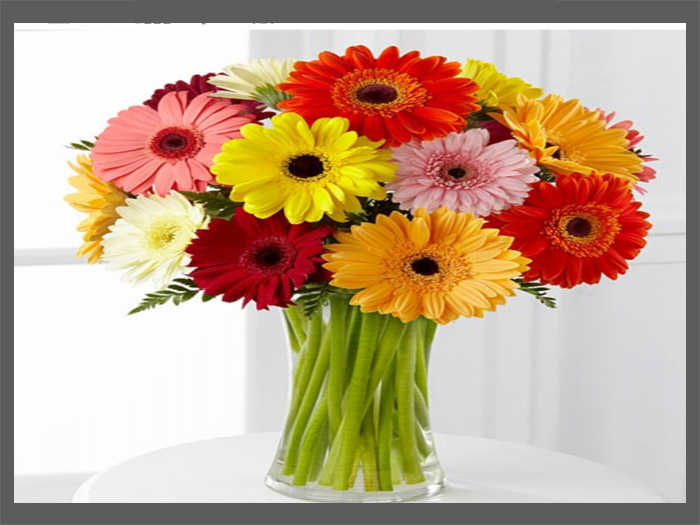
Scientific Name: Gerbera jamesonii
Family: Compositae (Asteraceae)
Gerbera is a herbaceous, perennial tropical plant that is sensitive to cold. It has deep roots and produces individual flowers on hairy stems. The plant features deeply lobed leaves with dense hairs and long petioles. Each Gerbera flower head actually consists of several types of florets, including ray florets, disc florets, and transitional florets. The flowers have five stamens and one pistil formed by two fused carpels.
Gerbera flowers are available in a wide range of vibrant colors, including white, red, yellow, orange, and pink. These beautiful blooms are widely used by online flower shops for creating flower bouquets, flower baskets, flower wreaths, and many other flower delivery arrangements. For example, pink Gerberas are among the most popular flowers for expressing gratitude and are frequently chosen for thank-you bouquets. White Gerberas are commonly used in sympathy arrangements, including funeral wreaths and sympathy flowers.
Gerbera plants have an average productive lifespan of about two years. After this period, flower quality declines and the plants gradually lose their resistance to pests and diseases, so they are usually replaced. Gerberas can be propagated by both seeds and division of mature clumps.

Growing Requirements:
Light: Higher light intensity increases photosynthesis, carbohydrate storage, and the vase life of cut flowers. Insufficient light results in elongated stems and delayed stem hardening, which may cause flower stems to bend. In general, Gerbera requires a bright location with approximately 16 hours of light per day. Flowering is enhanced under high light conditions, while partial sun and light shade are preferred when producing flowers with longer stems. Gerbera is also sensitive to the direction of light (phototropism), which is why stems are often supported with floral wire during flower arranging.
Temperature: Gerbera is sensitive to cold, with a minimum temperature tolerance of approximately 5°C (41°F). For this reason, it is commonly cultivated in greenhouses in colder regions. Research has shown that plants produce more flowers when the temperature difference between the air and the root zone is minimal. During autumn and winter, flower quality is generally better in cooler greenhouses than in warmer ones. An optimal daytime temperature of 21°C (70°F) and a nighttime temperature of 17°C (63°F) are recommended until flower buds appear. After bud formation, increasing the daytime temperature to 24°C (75°F) promotes faster bud development. Higher temperatures also increase leaf size, with the largest leaves observed around 25°C (77°F). Increasing the difference between day and night temperatures (DIF) encourages longer flower stems. Maintaining the root zone at approximately 21°C can also help extend flowering.
Watering: Gerberas require regular watering and a well-drained growing medium. Excessive irrigation may lead to crown rot, powdery mildew, and Botrytis infections. On the other hand, water stress, similar to salt stress, accelerates aging, shortens vase life, reduces flower diameter, and produces shorter flower stems.
Storage: Cut Gerbera flowers can be stored at approximately 4°C for 7–8 days. Their typical vase life ranges from 3 to 8 days, depending on post-harvest handling and environmental conditions.