









Dracaena Plant Guide
The Dracaena, also known as the Dragon Tree, is a beautiful ornamental plant with stiff, attractive leaves. Its foliage is a rich green with striking red edges, while its stems are slender, gray in color, and topped with glossy leaves. Ordering a Dracaena houseplant is an excellent choice for decorating both indoor and outdoor spaces, especially during spring. The flowers of this plant are white and are often decorated with circular yellow and orange markings.
When you order a Dracaena plant and bring it indoors, its flowers gradually disappear, allowing the attractive foliage to become the main decorative feature. In the flower industry, Dracaena is considered one of the best plants for beginners because it requires very little maintenance and is easy to grow. In warm climates, these plants can reach heights of up to 6 meters (20 feet) outdoors. As indoor plants, however, they usually grow to about 2 meters (6.5 feet) or less. Like many other houseplants available in flower shops, Dracaena tolerates a wide range of temperatures and is highly resistant to drought and harsh growing conditions. It also has a remarkably durable root system.
Types of Dracaena
The scientific name of Dracaena is Dracaena marginata. Traditionally, it was classified in the Liliaceae family and is known in Persian as "Khoon-e Siavashan". This genus includes around 40 species of evergreen shrubs. Most species resemble palm trees and produce roots that maintain the same diameter throughout their lifetime, with a distinctive yellow-orange color.
If you are planning to buy a Dracaena houseplant, here are some of the most popular varieties:
Dracaena marginata
This is one of the most adaptable varieties for indoor environments. It features green leaves with narrow red margins and subtle grayish stripes. If yellow streaks begin appearing on the leaves, it usually indicates that the plant needs more light.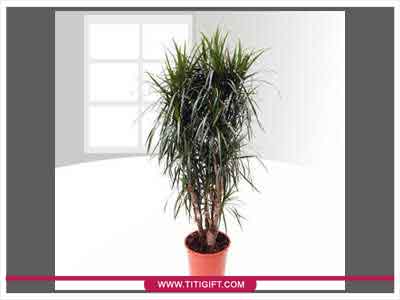
Dracaena deremensis
This variety has long, narrow leaves with white or yellow variegated margins.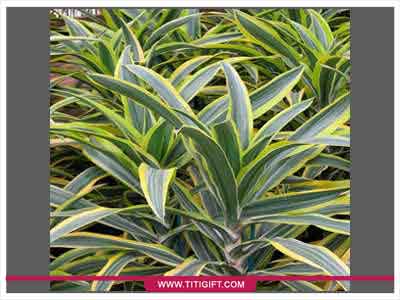
Dracaena draco
Known as the Dragon Tree, this species has stiff, sword-shaped green leaves and is highly valued for its architectural appearance.
Dracaena reflexa
Also known as the Song of India plant, this variety features green leaves with bright yellow margins, giving it a vibrant and elegant appearance.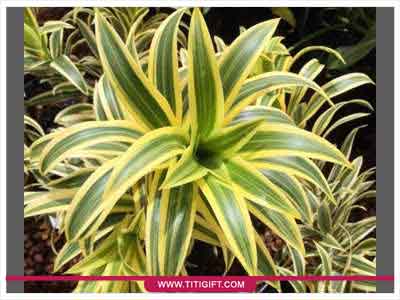
Light Requirements
Dracaena grows best in bright locations with plenty of indirect light. It can also survive in lower-light conditions, although its growth will become slower, its leaves will be smaller, and their colors may lose some of their vibrancy. Avoid exposing the plant to intense direct sunlight, as this may scorch the leaves.
Soil Requirements
When planting Dracaena in a pot, use a well-draining potting mix with moderate density. A loam-based soil enriched with a small amount of peat moss is ideal. Make sure the pot provides enough space for the roots to develop properly. Some Dracaena species native to Hawaii can even tolerate rocky soils.
Watering
Avoid overwatering Dracaena. Always make sure excess water drains completely from the pot. Wait until the top layer of the soil becomes dry before watering again.
Under lower light conditions, the plant may only need watering every two to three weeks. Brown leaf tips often indicate excessive watering, although they may also result from fluoride or salt accumulation in the water. To prevent leaf discoloration, avoid using water with high fluoride levels whenever possible. If the leaves begin turning yellow, the plant may need more frequent watering. Temperature and Humidity
Dragon Trees thrive in temperatures between 70°F and 80°F (21°C–27°C). They also prefer moderate indoor humidity. If the air inside your home is too dry, mist the leaves occasionally or use a humidifier to increase the humidity around the plant.
Fertilizing
Dracaena does not require frequent fertilization. Apply a light dose of fertilizer at the beginning of spring, and feed the plant only once or twice during the growing season. Avoid fertilizing during winter, when the plant's growth naturally slows down.
Repotting
Repot your Dracaena whenever it becomes root-bound. Since this plant grows relatively slowly, it usually only needs repotting every two or three years. Choose a container that is slightly larger than the previous one to give the roots enough room to continue growing.
Propagation
Dracaena naturally develops multiple stems as it matures, making pruning an excellent opportunity for propagation. It can be propagated successfully through both stem tip cuttings and stem section cuttings.
Propagation by Stem Cuttings
Dracaena is easy to propagate from stem cuttings. Using a clean, sharp knife, cut healthy stem sections measuring approximately 10–15 cm (4–6 inches) in length. Stem cuttings can be taken either from leafy shoots or from leafless sections of the stem. Divide leafless stems into pieces about 5–7.5 cm (2–3 inches) long, ensuring that each piece contains at least one dormant bud.
Be careful not to plant the cuttings upside down. The lower end of each cutting must be placed in the growing medium; otherwise, roots will not develop. Dip each cutting into a rooting hormone before planting. Remove excess leaves from the stem to reduce moisture loss.
Plant the cuttings in a 9 cm (3.5-inch) pot filled with a propagation compost or seed-starting mix. Cover the pot with a clear plastic bag to maintain humidity, then place it in a warm location at approximately 24°C (75°F), away from direct sunlight. Under suitable conditions, roots usually develop within about two months. Once the cuttings have rooted, remove the plastic cover and begin a regular fertilizing schedule.
If propagation is carried out during late winter, the stem sections can also be placed horizontally in moist sand until they begin producing roots and shoots.
Best Time to Propagate Dracaena
The ideal time to propagate Dracaena is from mid to late spring or from late summer to early autumn.
Common Diseases and Pests
Although Dracaena is generally resistant to diseases, it may occasionally become infested with pests or develop health problems under poor growing conditions. Excessive exposure to direct sunlight may cause the leaves to become smaller, while prolonged periods of hot, dry weather can also weaken the plant.
White Cotton-Like Masses
White cottony clusters on the leaves or stems are usually caused by mealybugs. Treat the plant with a systemic insecticide every two weeks until the infestation has been eliminated.
Yellow, Soft, and Rotting Leaves
Yellowing leaves accompanied by soft or rotting tissue usually indicate overwatering and root rot. Allow the surface of the soil to dry before watering again and ensure the pot has proper drainage.
Discolored Leaves with Brown Spots
Brown spots and discoloration are often caused by insect pests. Treat the plant with an appropriate insecticide once a month until all symptoms disappear.
Yellow Leaf Margins and Brown Leaf Tips
One of the most common Dracaena problems is brown leaf tips combined with yellowing lower leaf edges. This usually indicates that the plant is not receiving enough water. Adjust your watering routine, and if the soil has become excessively dry, place the pot in a container of water for about 15 minutes so the root ball can absorb sufficient moisture. Pale Leaves and Leaf Drop
Leaves that become pale and begin to fall are usually a sign that the surrounding air is too hot and dry. Move the plant to a cooler location and, during the summer, mist the foliage about three times a week to increase humidity.
Brown Scorched Spots on the Leaves
Avoid misting the plant while it is exposed to direct sunlight. Water droplets act like tiny magnifying glasses, concentrating the sun's rays and causing leaf scorch and brown burn marks.
Stem Rot from the Top
If the stem begins to rot from the top, the plant has most likely been exposed to temperatures that are too low. Move it to a warmer location and avoid exposing it to cold drafts.
Leaves Losing Their Color
Faded or pale leaves are generally caused by insufficient light. Move the plant to a brighter location with plenty of indirect sunlight, but avoid placing it under harsh direct sun, which can damage the foliage.
Slow Growth
If new leaves are noticeably smaller than older ones and the plant's growth has slowed, Dracaena is most likely lacking nutrients. Apply a balanced fertilizer formulated for houseplants during the growing season to encourage healthy growth.
Yellow Leaves with Webbing Underneath
Fine webbing beneath the leaves accompanied by yellowing foliage usually indicates an infestation of spider mites. Treat the plant with a suitable miticide every two weeks until the infestation has been eliminated.
Pests
Spider Mites
Spider mites cause yellowing leaves and produce fine webs on the undersides of the foliage.
Thrips
Thrips cause leaves to lose their vibrant color and may create brown spots on the leaf surface. They can usually be controlled with systemic insecticides.
Fusarium moniliforme
This fungal disease causes yellow or dark brown lesions on the leaves and may also lead to rot where the leaf joins the stem.
Erwinia carotovora
This bacterium causes bacterial soft rot, producing symptoms similar to those of Fusarium infection, including stem and leaf decay.
Various insects and spider-like pests may also attack Dracaena from time to time. Regular inspection, proper watering, adequate airflow, and maintaining suitable growing conditions will help prevent most pest and disease problems.