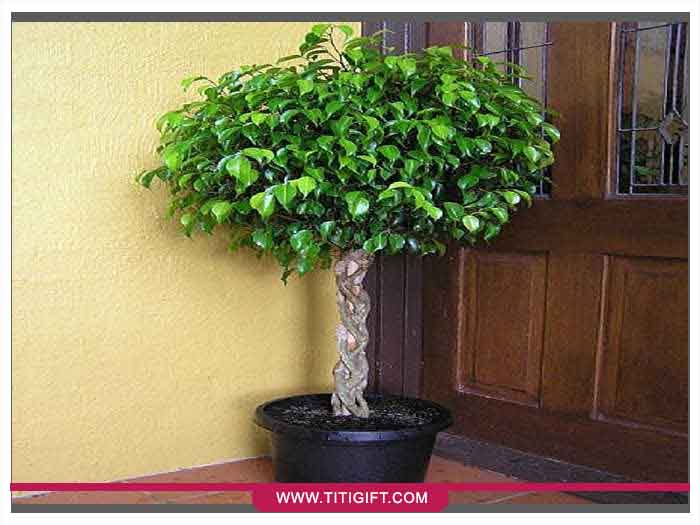









Getting to Know the Ficus Benjamina (Weeping Fig)
Scientific name: Ficus benjamina
Family: Moraceae
Ficus benjamina is an excellent choice for buying a houseplant and adapts very well to indoor environments. In open air conditions, it can grow up to 5 meters tall. It is sensitive to underwatering, especially in cold weather, which can cause leaf drop. The plant requires sufficient but indirect light. Variegated varieties with green and cream-colored leaves have recently become popular in Iran and are widely cultivated in the flower industry. For ordering a Ficus benjamina plant, attractive artistic techniques such as braiding the stems into a braid shape are often used, which greatly enhances its beauty. Younger plants need support stakes. The variegated varieties are more flexible and drooping than the solid green varieties, and they also develop a smaller root system. For this reason, variegated types are usually grafted onto green-leaf rootstocks.
Requirements:
Light: It needs relatively bright light, but direct summer sunlight, especially through glass, can damage the leaves.
Temperature: The minimum temperature in winter is 15°C (59°F), and the maximum recommended temperature in summer is 24°C (75°F). With daily watering, it can tolerate temperatures up to 30°C (86°F).
Humidity: Misting the plant twice daily, in the morning and evening, can completely stop leaf drop. If brown spots appear on the leaves, stop misting and place the pot on a humidity tray (pebble tray).
Feeding: During spring and summer, feed the plant every two weeks with a water-soluble fertilizer formulated for ornamental plants. Follow the instructions provided on the fertilizer package.
Suitable soil: The best growing medium is compost-rich soil.
Repotting: While the plant is young, it should be repotted every year. Once it has reached the maximum pot size, replacing the top layer of soil with fresh soil is recommended.
Cleaning the leaves: Misting is usually sufficient for keeping the leaves clean. Do not use leaf-shining products except when absolutely necessary, and at most once a month.
Propagation: The best time to take cuttings from Ficus benjamina is late spring, when the newly produced stems have become slightly firmer. Take a pencil-sized cutting from a semi-hard stem containing one pair of leaves, make a diagonal cut, and place it in a container filled with perlite or sand. Watering should be done from the bottom.