









Getting to Know the Coleus Plant
Scientific Name: Solenostemon scutellarioides
English Name: Painted Nettle – Coleus
Family: Lamiaceae (Labiateae)
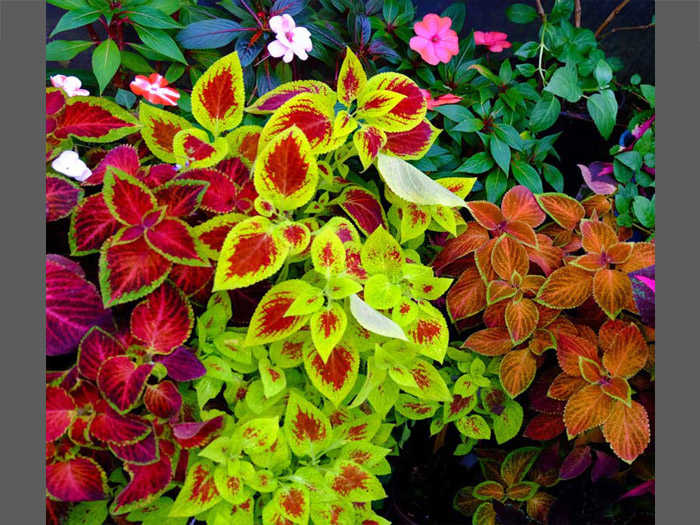
Coleus is a fast-growing, evergreen perennial native to the tropical regions of Africa, Asia, Australia, eastern India, and the Philippines. Its colorful foliage, available in a wide range of striking patterns and shades, makes it one of the most distinctive ornamental plants. By ordering a Coleus plant pot or purchasing a Coleus potted plant during the summer, you can grow it outdoors under the shade of trees. Indoors, it should be placed in a bright location to maintain the vibrant color of its leaves. Coleus grows rapidly, producing leaves continuously. Its flower spikes also develop quickly under suitable conditions and should be removed immediately. Pinching the terminal buds encourages lateral branching, resulting in a fuller, bushier plant with denser foliage.
Care Requirements:
Watering: Water whenever the soil becomes dry. During colder seasons, allow the soil to dry before watering again. Excessive watering during winter or in poorly ventilated indoor environments, especially in summer, may cause the stems to turn black.
Light: The ideal light for buying and growing an indoor Coleus plant is bright filtered sunlight from a south-facing window, although a north-facing window is also suitable. Direct sunlight causes the leaves to lose their vibrant color, while insufficient light leads to yellowing, poor growth, and greener leaves. When ordering a Coleus plant, remember that proper ventilation is even more important than light.
Fertilizing: To improve nutrient absorption, you can add used tea leaves to the soil. This helps keep the soil slightly acidic and naturally disinfected, reducing the risk of fungal diseases.
Ventilation: Coleus requires good air circulation. In dark, poorly ventilated rooms, it gradually declines. Ordering an indoor Coleus plant is recommended for spacious areas such as offices, companies, banks, shops, or near home windows where it can benefit from fresh air.
Propagation: Coleus can be propagated by surface-sowing seeds in cool weather according to planting instructions or by taking stem cuttings in spring and early summer. Propagation through cuttings is much faster. Root the cuttings in water, perlite, or sand. Spring is the best season for propagation because new roots emerge from the root-generating tissue, which becomes active in cooler weather. Summer propagation is generally less successful, and rooting hormones are usually unnecessary.
Temperature: Coleus prefers cool temperatures, with around 18°C being ideal. Cold conditions can lead to frost damage or fungal infections, while hot summer temperatures without proper ventilation may cause stem blackening and fungal diseases. These problems can often be corrected by reducing excess water and replacing the soil. Good ventilation is also essential during winter.
Repotting: Every six months, check the drainage holes to see whether the roots are emerging. If roots are visible, repot the plant into a larger container. Coleus is a fast-growing plant and can grow up to 60 cm per year.
Soil: The best growing medium consists of equal parts washed sand, leaf mold, well-rotted animal manure, and garden soil.
Pruning: Regularly pinch the terminal buds to maintain a compact, rounded, and bushy shape. If the plant flowers at the end of summer, remove the flowers by hand so that the plant's energy is directed toward foliage growth instead of seed production.
If neglected, the plant may become leggy and lose its lower leaves. In this case, take cuttings from the healthy stems, root them, and discard the old plant.
Humidity: Coleus prefers moderate humidity. Humidity can be increased by placing the pot on a tray filled with water and pebbles. Common Problems and Treatments:
Leaves turn yellow and fall off: This may indicate low humidity or underwatering. Review the growing conditions.
Lower leaves turn yellow and drop: Overwatering is the most common cause. Reduce watering and check the pot's drainage.
Leaves dry out and fall: Usually caused by hot, dry air. Adjust the watering schedule and increase humidity if necessary.
Healthy leaves suddenly fall: The temperature may be too low, or the plant may not be receiving enough water.
Plant wilts: This can result from several factors, including underwatering, overwatering, cold temperatures, insufficient light, or, most commonly, excessive direct sunlight. Check all growing conditions carefully.
Leaf colors become pale and faded: Usually caused by insufficient light or excessive application of nitrogen-rich fertilizer.
Brown or scorched spots appear on the leaves: This is often caused by misting the plant while it is exposed to direct sunlight or by excessive sun exposure.
White cotton-like insects appear on the plant: These are mealybugs. First, try removing them with a cotton swab dipped in alcohol or tobacco extract. If the infestation persists, use a systemic insecticide such as Confidor.