









Introduction to Calathea, Calathea Care and Growing Guide
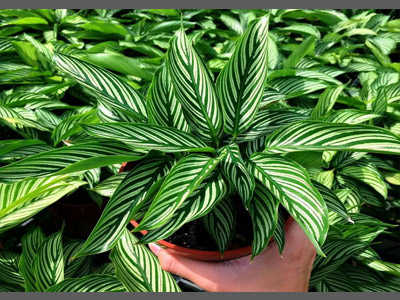
The Calathea potted plant is a very beautiful ornamental plant with delicate leaves and a wide variety of colors. This plant is native to tropical regions, and its name comes from the Greek word meaning something similar to “basket.” Its attractive appearance and unique characteristics have made it an excellent option for ordering flowers and buying indoor plants.
Calathea has around 270 different species and belongs to the Marantaceae family. These plants vary greatly in shape, color, and size, and their height usually ranges from 15 to 30 cm. Decorative varieties of Calathea pots are especially popular because of their colorful, patterned, spotted, and striped leaves.
One of the fascinating features of Calathea is that its leaves fold upward in the evening and reopen in the morning. In flower shops, the flowers of some species can be found in white, yellow, orange, and other colors, and a few species are even edible.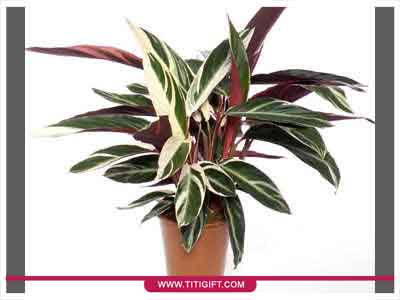
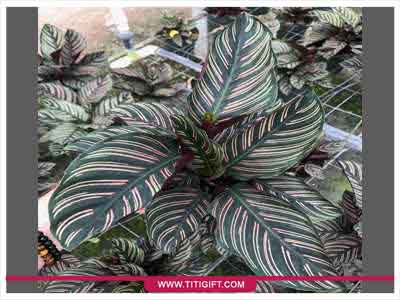
Different Types of Calathea
Calathea crocata:
Native to Brazil, this species has wavy leaves. The upper surface of the leaves is dark green, while the underside may be purple, red, yellow, or orange. These plants have long stems and their flowers usually last 6 to 8 weeks. They require temperatures above 19°C and bright indirect light.
Calathea lancifolia:
This species has long, narrow leaves and can grow taller than 45 cm. The main leaf color is light green with olive-green patterns along the edges, and the undersides are purple.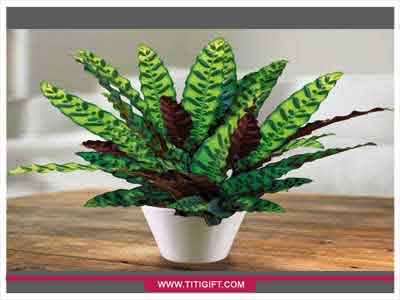 Calathea orbifolia:
This species has large round green leaves and grows up to about 40 cm tall. The leaves are decorated with alternating green and cream-colored bands, and the underside is noticeably lighter than the upper surface.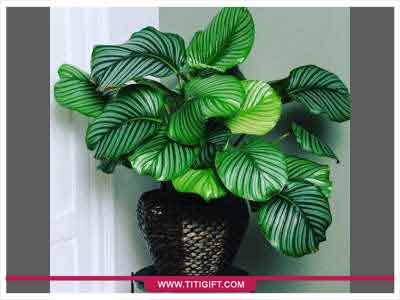 Calathea makoyana:
This species has oval green leaves about 15 cm long, with pale purple coloring on the undersides.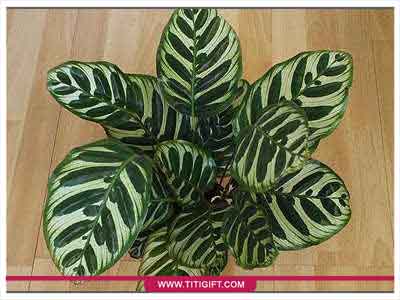
Calathea Plant Care
In their natural habitat, Calatheas grow in tropical environments. Therefore, when buying a Calathea potted plant, you should provide environmental conditions similar to their native habitat, including suitable placement, temperature, and humidity. In professional flower care, maintaining these conditions is essential for keeping the plant healthy and vibrant.
Light: Calatheas need bright indirect light. Avoid placing them in direct sunlight. If the leaves bend toward one side, it may indicate excessive light exposure. The best place for this plant is near a window covered with a sheer curtain. Keep the plant at a temperature between 18 and 25°C with humidity levels of 70–80%, and avoid exposing it to temperatures below 18°C.
Soil: For ordering a Calathea houseplant, the soil should be rich in fiber and humus and allow good oxygen circulation. Mixing perlite with the soil improves drainage and water retention. A peat-based substrate is ideal, and a mixture of peat moss and compost also works well. The soil pH should be between 4.5 and 5.5 and should be checked regularly if possible.
Repotting: Calathea has relatively strong roots, so it should be moved to a larger pot every 2–3 years. The best time for repotting is before new growth begins. Remove the plant carefully to avoid damaging the roots. Inspect the roots and trim away any rotten sections. Ensure proper drainage in the new pot by placing coarse sand or perlite over the drainage holes. Then position the plant, fill the pot with soil up to about 2 cm below the rim, gently firm the soil, and water thoroughly.
Watering: Calathea requires relatively frequent watering. From May to September, water the plant regularly with lime-free water. However, excessive watering can damage the roots just as much as underwatering. Keep the soil consistently moist, but allow the top layer to dry slightly between waterings. Brown spots on the leaves often indicate low humidity. To increase humidity, mist the leaves occasionally or use a humidifier. Water containing high levels of lime may also cause leaf spotting. Tap water can be used if it is left standing in a container for 24 hours so that minerals can settle. Since the leaves tend to collect dust, wipe them gently with a damp cloth from time to time.
Fertilizing: Calathea does not require frequent fertilization. During the active growing season, add a liquid fertilizer to the irrigation water. Choose a fertilizer that is low in fluoride and salts. No special fertilizer is necessary; a standard houseplant fertilizer is sufficient.
Pruning: Pruning is limited compared with many other plants. Simply remove dry leaves and faded flowers to keep the plant looking tidy.
Winter dormancy: Calathea usually does not enter a true dormancy period. During the colder months (October to February), it can be kept in a slightly cooler location, but temperatures should never fall below 18°C. Because indoor heating systems reduce humidity during winter, the plant becomes more vulnerable to pests, so maintaining adequate moisture in the soil and surrounding air is very important.
Diseases
Root rot: Root rot is usually caused by overwatering or excessive salts in the fertilizer. It is a serious condition that can threaten the plant’s survival. Symptoms include yellowing and drying of leaves and stems. Remove the affected roots and leaves, then transfer the plant to a new pot with fresh, well-draining soil.
Pests
Spider mites: Spider mites often appear on the undersides of leaves during winter when the air is dry. Wash the plant thoroughly and use an appropriate miticide if necessary. Increasing humidity around the plant will also help prevent infestations.
Thrips: Yellow, spotted leaves may indicate a thrips infestation. To control these pests, regularly spray the plant with a mild solution of water and soap.