









Introduction to Crassula Bonsai
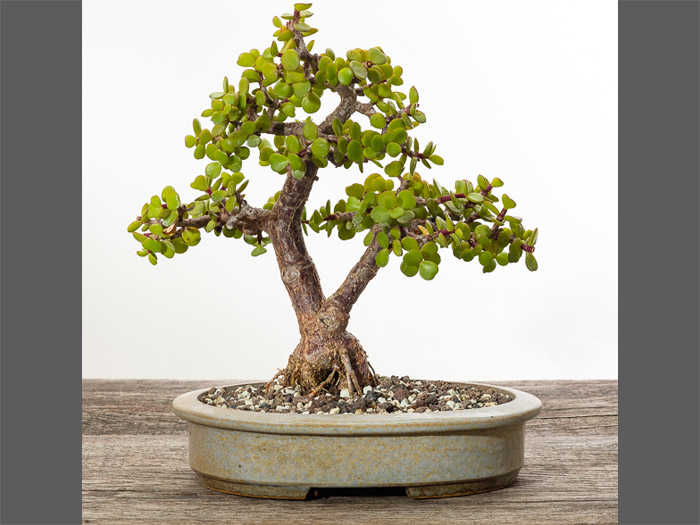
The Crassula plant, scientifically known as Crassula ovata, belongs to the Crassulaceae family and the Crassula genus. Native to South Africa, it has become one of the most popular choices for buying houseplants around the world.
Crassula ovata is a succulent evergreen plant, meaning its leaves and stems store water. It has thick, glossy leaves and a relatively slow growth rate. In the floral industry, Crassula ovata is commonly known as the Jade Plant, a name inspired by its beautiful jade-green leaves. Under different lighting conditions, the edges of its leaves may develop an attractive reddish tint. As the plant matures, its stems gradually become woody and brown.
With proper care and when you order a Crassula plant, it can bloom during spring, producing clusters of small white or pale pink star-shaped flowers. One of the key conditions required for flowering is a cool, dry, and dark dormant period during winter.
Among the many Crassula cultivars available in flower shops, Crassula ovata 'Hummel's Sunset' is one of the most popular varieties. It is distinguished by its attractive foliage, surrounded by a narrow red margin along the edges of the leaves.
Today, Crassula Bonsai has also become increasingly popular. Bonsai Crassula plants typically reach a height of around 30 cm and are highly valued for their miniature tree-like appearance. Common English names for this plant include Lucky Plant, Friendship Plant, Jade Plant, and Money Tree.
Crassula (Jade Plant) Care Guide:
Watering: Like other Crassula species, Jade Plants require relatively little water. During summer, allow the soil to dry completely between waterings. In winter, wait until the soil is dry to a depth of about 1–2 cm before watering again. Overwatering is the most common cause of problems, leading to leaf drop and stem rot. On the other hand, prolonged underwatering causes the leaves to lose their thickness, and extended drought may eventually result in leaf drop as well.
Light: Crassula loves bright light. It tolerates direct sunlight well and, under such conditions, develops thicker stems and denser foliage. It can also adapt to lower light levels, although the leaves become more widely spaced along the stems. Morning to midday sunlight is preferred over the intense afternoon sun, as higher afternoon temperatures combined with direct sunlight may damage the plant. Therefore, a south-facing window is considered the ideal location for growing Crassula indoors. With sufficient light, the edges of the leaves develop beautiful red highlights that greatly enhance the plant's ornamental value.
Temperature: The ideal temperature for healthy growth is between 15°C and 24°C (59°F–75°F). Although Crassula tolerates cooler temperatures, it is best to keep it at around 10°C (50°F) during winter to minimize the risk of frost damage and stem rot.
Soil: Crassula requires a light, well-draining potting mix that prevents water from remaining around the roots for extended periods. A mixture of leaf mold, coco peat, and perlite provides excellent drainage. However, any lightweight potting mix with good drainage can also be used successfully.
Fertilizing: Feed the plant once a month during spring, summer, and autumn with a balanced houseplant fertilizer. During winter, allow the plant to rest without fertilizing.
Repotting: Frequent repotting is unnecessary. In fact, the plant should only be repotted when the roots begin emerging from the drainage holes at the bottom of the pot.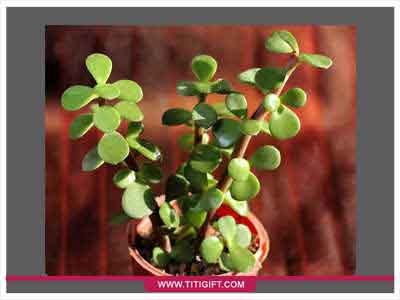
Propagating Crassula (Jade Plant)
Propagating Crassula from a Leaf: Propagating the Jade Plant is very easy. A single healthy leaf can be removed from the plant and placed upright in a suitable moisture-retaining growing medium until it develops roots. For example, a mixture of sand and perlite is an excellent medium for rooting leaf cuttings. Once roots have formed, a small new plant will begin to grow. Keep in mind that the original leaf used for propagation will eventually dry out and die after providing energy for the new plant. Place the pot containing the leaf cuttings in a bright location away from direct sunlight. Root formation usually takes about one month. During this period, watering is unnecessary and may even cause the cuttings to rot. Therefore, moistening the growing medium before placing the cuttings is generally sufficient.
Propagating Crassula from Stem Cuttings: The stems of the Jade Plant naturally have the ability to produce roots wherever they come into contact with soil, especially around the nodes (the points where leaves attach to the stem). Rooting is generally more successful when the days are shorter, such as in autumn or early spring, although stem cuttings can be taken successfully throughout the year. Choose a mature, healthy stem and cut a section approximately 7–10 cm (3–4 inches) long just above a node. Each cutting should have at least one pair of leaves. If there are additional leaves on the lower part of the cutting, remove them to make planting easier. Before planting, allow the cuttings to dry in a warm, shaded place overnight so the cut surface can callus. Then place the cuttings into the prepared growing medium. Watering is not necessary until roots begin to develop. Root growth usually starts after approximately 3–4 weeks.
Pruning the Jade Plant
Late winter or early spring is the ideal time to prune a Jade Plant. Remove any stems or branches that reduce the plant's overall appearance or have become damaged. Avoid pruning more than 30% of the plant at one time, as excessive pruning may cause stress. In addition, pinching back the tips of selected stems periodically during the growing season encourages a fuller, bushier, and more compact plant.